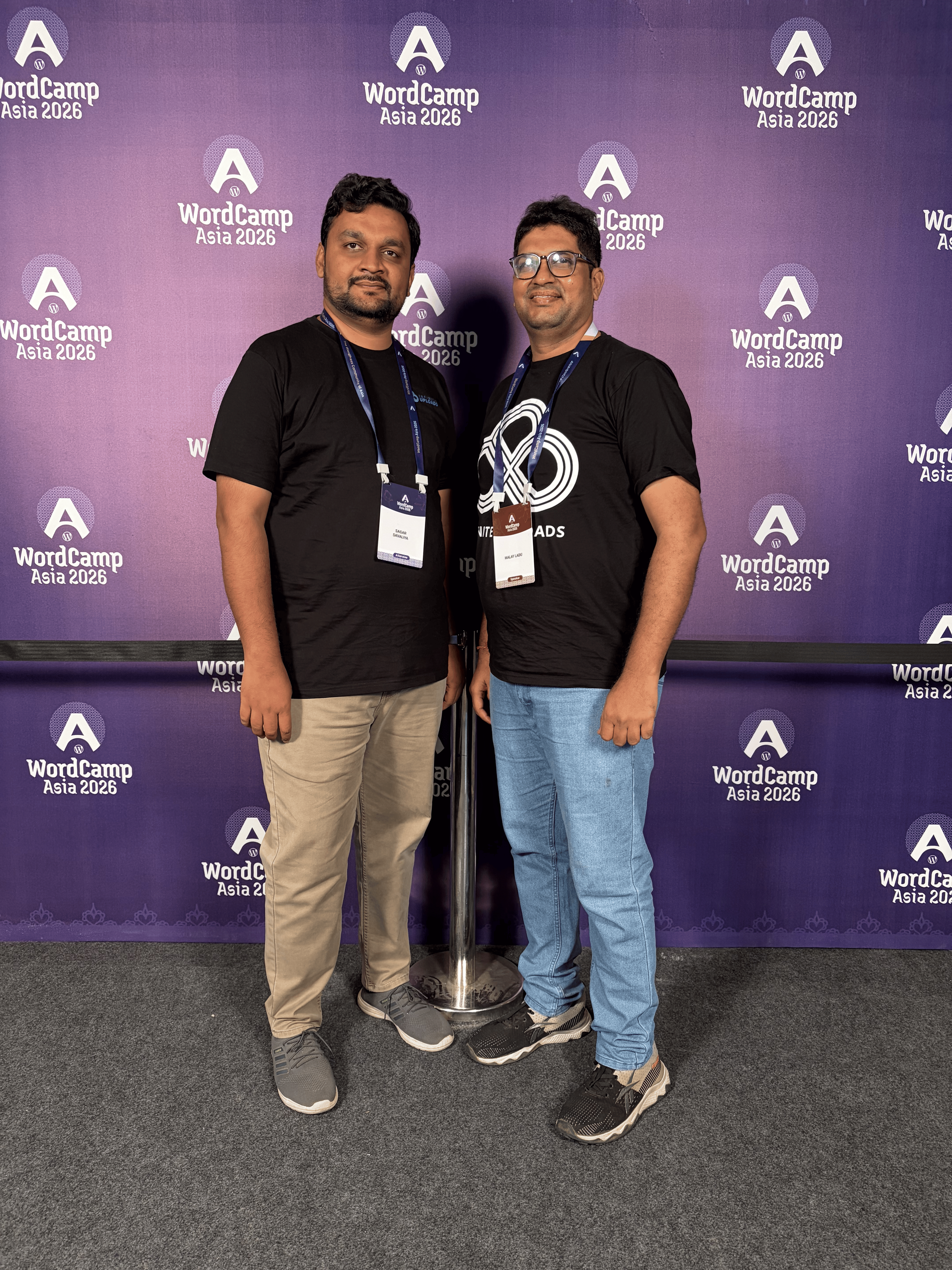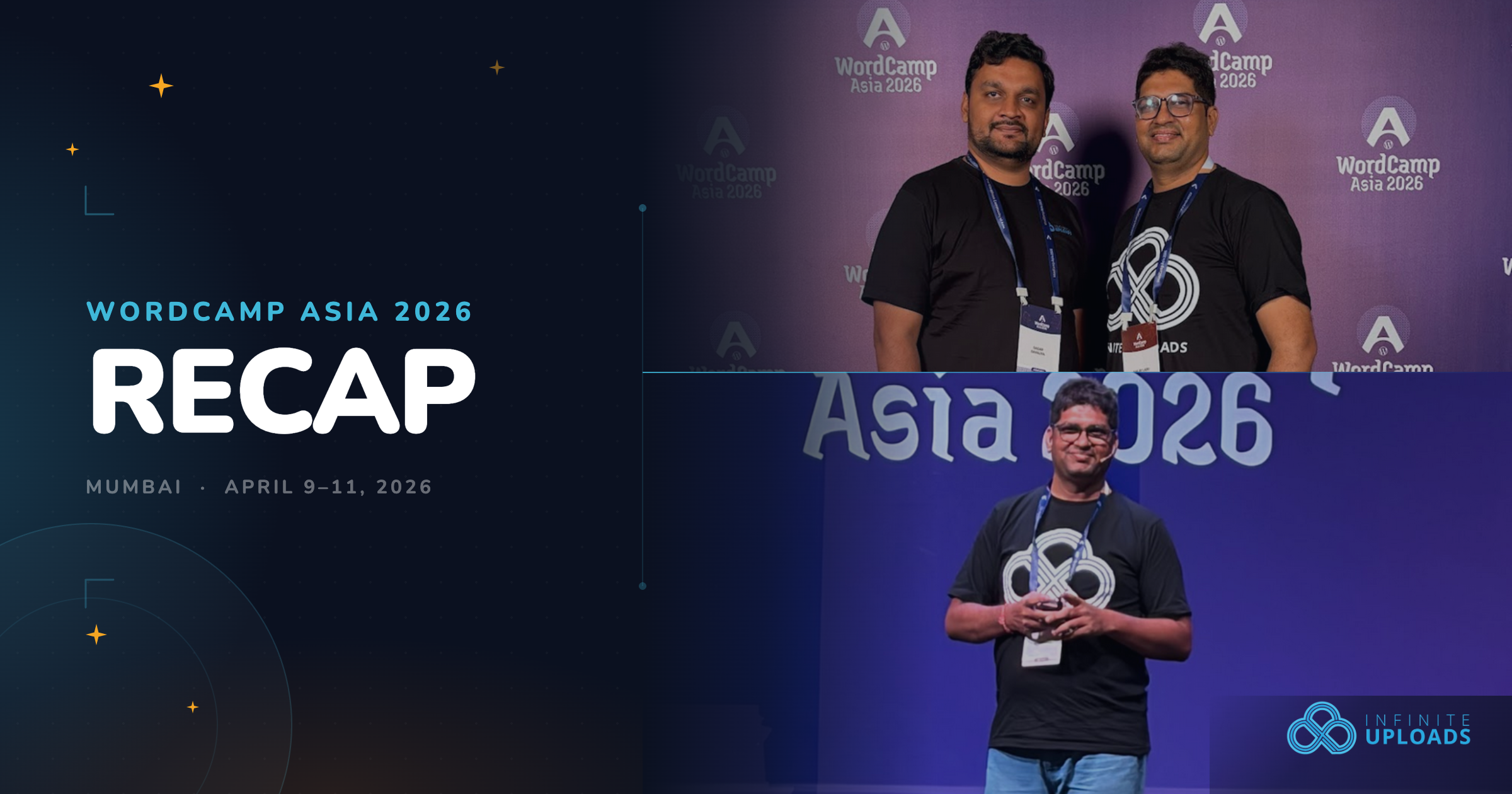
I wasn’t at WordCamp Asia 2026. I wanted to be, but I was triple-booked that weekend with my nonprofit student pitch competition, PressConf, and the conference itself all landing on the same days. The pitch competition won out because I’m the program coordinator and 30 high school students were counting on me to be there. So instead of being in Mumbai, I sent two members of the Infinite Uploads/ClikIT team: Malay Ladu, who was selected as a speaker, and Sagar Savaliya, who was attending his first flagship WordCamp and traveling from Surat.
WordCamp Asia 2026 ran April 9–11 at the Jio World Convention Centre in Mumbai, India, and drew over 2,200 attendees across three days of contributor sessions, conference talks, workshops, and a whole lot of hallway networking. It was the fourth edition of the flagship event, following Bangkok, Taipei, and Manila. Even though I wasn’t there in person, I watched the recordings, debriefed the team, and got a pretty full picture of how the event played out.
Contributor Day
Day one was Contributor Day, and the scale was impressive. Over 1,500 people joined 38 contribution tables covering WordPress core, polyglots, photos, testing, training, and more. Malay spent the day working on a WordPress core ticket, and his daughter attended YouthCamp, where kids used WordPress Playground to build their first websites. She’s eight and now knows what WordPress is.
Malay on Stage
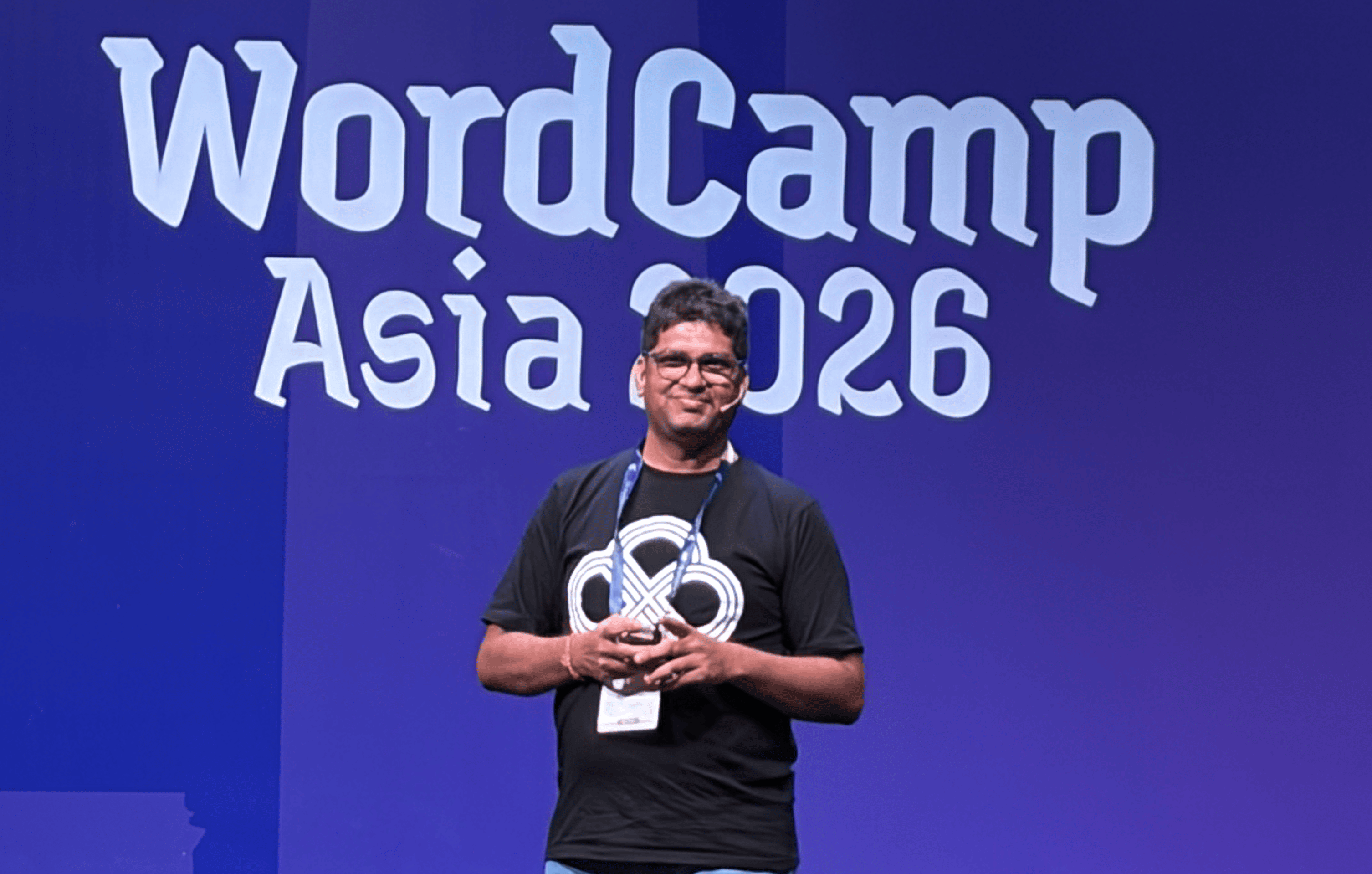
Malay’s talk was called "The Art of Integrations: Making WordPress Work with Everything." He walked the audience through how plugins connect, how APIs work, and how to think about building integrations that hold up as things change. The whole thing was built around a restaurant analogy, which I thought was well executed.
My favorite part was the caching explanation. The kitchen tells the cashier they’re out of mangos, so the cashier stops asking. But the kitchen also has to tell the cashier when mangos are back in stock, or else you get stale cache. Simple concept, perfect analogy.
He also did something smart with the audience. Early on, he asked how many were developers versus business owners, and adjusted his examples on the fly based on who was in the room. I watched the recording and thought the storytelling and connected workflows landed well.
What We Learned from the Sessions
AI was everywhere at this conference. It showed up in the opening keynote from James LePage ("WordPress and AI"), came back in Nirav Mehta’s "Lost and Found in AI Wonderland," and threaded through conversations in the hallways and at sponsor booths all weekend. Malay also attended Luke Carbis’s session on evolving plugin security standards, Leonardo Losoviz’s talk on the hidden gotchas of WP translations, a session about building WordPress community in Uganda, and a panel discussion on journalism and the open web.
Sagar attended three talks and spent the rest of his time in the sponsor hall doing outreach. The WP-CLI hands-on session with Sudar Muthu and Chandra Patel was right up his alley since he’s not familiar with WP-CLI. The session that stood out most to him was Rahul Bansal’s "How to Start an Enterprise WordPress Agency in 2026." The room was packed. One thing Sagar brought back that stuck with me: Rahul said don’t just hire people like you, hire people for the skills you don’t have. He also made a strong point about AI. Don’t just say you use AI. Explain what you did with it and how much productivity increased. Define that separately.
Networking and Getting the Word Out
The other half of the conference was about meeting people, and both Malay and Sagar took different approaches that ended up covering a lot of ground.
Malay connected with developers and business owners to introduce Infinite Uploads, including our media library folder management, cloud offloading, and CDN delivery. People were interested, and more than a few were surprised we could do all of that from a single plugin. He also met the Astra theme team and discussed potential integration with their Spectra page builder. And he finally got face time with WP Bakery, who we’d emailed about an integration request prior.
Sagar worked the sponsor hall. He introduced Infinite Uploads to hosting companies and pitched the idea of pre-installing our plugins or mentioning them in their onboarding content. He talked to hosting support teams, spent 30 minutes with WP Bakery’s marketing lead (Lawrence Ladomery who I know) learning about audience segmentation, and connected with the founder/creator of Contact Form 7, Takayuki Miyoshi, who said he named it CF 7 because 7 is a lucky number in Japan.
The Closing Session and Big Announcements
Matt Mullenweg was scheduled to deliver the closing keynote but wasn’t able to attend in person. He participated remotely, sending written responses during the live Q&A. Mary Hubbard, WordPress’s Executive Director, stepped in alongside Peter Wilson and Sergey Biryukov for a panel discussion that covered contributor growth, AI, plugin direction, local communities, and the long-term health of the open web.
Two big announcements came out of the closing session. First, WordCamp India is now a flagship event, joining WordCamp US, Europe, and Asia as the fourth flagship WordPress conference. It’s scheduled for 2027 and the location hasn’t been announced yet. India’s WordPress community is massive, so this makes sense. And honestly, I didn’t know it was going to be a flagship event. I thought it was going to be a larger local WordCamp.
Second, WordCamp Asia 2027 will be in Penang, Malaysia, April 9–11.
What We’d Do Differently
Malay had a good suggestion for next time: set clear goals before the event. Define exactly what we want to walk away with. A certain number of new contacts. Specific partnership conversations. Social media tags and posts. Not vague "go network" goals, but actual targets with numbers attached. I agree, and we’ll build that into our prep for future WordCamps.
What’s Next
WordCamp Europe 2026 is in Kraków, Poland from June 4–6, and WordCamp US 2026 is in Phoenix, Arizona from August 16–19. I plan to attend both. See you there!!