You’re running out of storage space. Or maybe your WordPress site just feels sluggish. Images load slowly, videos stutter, and your dashboard takes forever to respond.
Most people's instinct would be to upgrade their hosting plan.
But here’s the catch: hosting plans aren’t designed to scale with media-heavy websites.
Uploading dozens of high-res images, videos, or large PDFs consumes a lot of space quickly. And the more bloated your /uploads folder gets, the more your server struggles, especially on shared or entry-level plans.
But what if the real bottleneck isn’t your hosting at all? What if the real issue is how your media is stored and served?
The truth is, upgrading your hosting plan often treats the symptoms, not the cause. If you’re hitting storage or speed issues, media offloading is the smarter, more sustainable solution.
Why WordPress Users Upgrade Hosting Too Soon
If you’ve ever found yourself bumping into storage limits, your first instinct might’ve been to upgrade your hosting plan.
But here’s the thing: many WordPress users are upgrading their hosting for the wrong reasons, and far too early.
There are four common reasons why:
Reason #1. You’re running out of storage space
Your uploads folder is packed with images, PDFs, videos, and backups. You check your hosting dashboard and see you’re at 95% disk usage. Panic sets in.
Reason #2. Your site feels slow
Pages take too long to load, especially on media-heavy sections like photo galleries, blog posts with lots of images, or product pages with embedded videos.
Reason #3. Videos aren’t playing smoothly
You try hosting videos directly in WordPress, but they buffer, lag, or fail to load altogether.
Reason #4. The Media Library isn’t managed
You can’t find anything, and uploads sometimes fail because of file size or timeout errors.
These issues are real, but upgrading your hosting plan is just a temporary solution.
Hosting Upgrades Are a Band-Aid
Upgrading hosting only gives you more of the same i.e extra storage, bandwidth, maybe some RAM, without solving the real issue.
But the underlying problem remains, which means you’ll just run into the same issues again when that new storage fills up.
WordPress wasn’t built to handle large volumes of media. The core media library lacks smart compression, cloud delivery, and efficient organization.
Storing everything — images, videos, backups — alongside core WordPress files strains your server, forcing PHP and MySQL to compete for resources.
The real problem is your setup.
Why Your WordPress Media Is Slowing Everything Down
One of the biggest performance drains on your WordPress site is often hiding in plain sight: your media files.
As mentioned earlier, WordPress handles basic media needs (for example, a few images per post or an occasional PDF) well. But it starts to break down when you treat it like a media hub.
The performance hit comes from a few places:
- Large file sizes. Videos, RAW images, and design assets can be massive, especially if you’re uploading them uncompressed.
- Inefficient storage. By default, all files go to your /wp-content/uploads/ folder. The more you add to it, the harder your server works to deliver them.
- No built-in compression. WordPress doesn’t optimize images or media files out of the box.
- No native CDN integration. Files are served from your server, no matter where your visitors are located.
When your server has to handle every media file, your core PHP and MySQL processes slow down. That hurts everything from page loads to admin dashboard speed.
Let’s look at a few real-world examples:
- Uploading large video files directly to your Media Library is a quick way to kill your site speed and eat through hosting limits.
- Storing backups in the same hosting account. Did you know that many cPanel or Plesk-based hosts count these toward your total disk space? Even if your site files are small, a few full-site backups can max you out.
- Media-heavy landing pages or WooCommerce product pages with high-res product images and embedded promotional videos can increase load times and fail Core Web Vitals.
Cheap hosting plans often come with shockingly low storage caps. We’ve seen shared plans with just 2-5 GB total storage. For context, that’s barely enough for WordPress core files, let alone media.
The Hidden Cost of Upgrading Hosting
When your site hits performance or storage limits, upgrading hosting seems logical, and it may help, briefly.
But you're just paying more for a temporary fix.
What You Do Get with a Hosting Upgrade
Most hosting upgrades give you:
- More disk space. You can keep uploading and storing more images, videos, and backups until you hit the next limit.
- More bandwidth. This helps a little if you're getting more traffic, but not much if your issue is media-heavy pages.
- Better CPU/RAM allocation. This you only get sometimes. But if your server is still serving all your images and videos directly, it doesn’t matter because those requests still clog things up.
What You Don’t Get with a Hosting Upgrade
Here’s what a hosting upgrade doesn’t fix:
- Smarter file management. Your Media Library will still be bloated and slow. You’re still uploading to the same old /uploads folder.
- A Content Delivery Network (CDN). Most shared or mid-tier plans don’t include a CDN. That means every visitor (regardless of their location in the world) must download files directly from your origin server.
- Media optimization tools. No image compression. No streaming. No intelligent delivery. Just more space to keep doing things inefficiently.
So yes, you get more “space”, but you’re still storing and serving files in a way that ultimately drags down performance. And you’re now paying $10, $20, maybe $50 more per month for it.
Smarter Alternative: Offload Media to the Cloud
Here’s a thought: instead of throwing more money at your hosting provider, what if you just stopped using your hosting server for something it was never meant to handle?
That’s where offloading media to the cloud comes in.
In plain terms, this means:
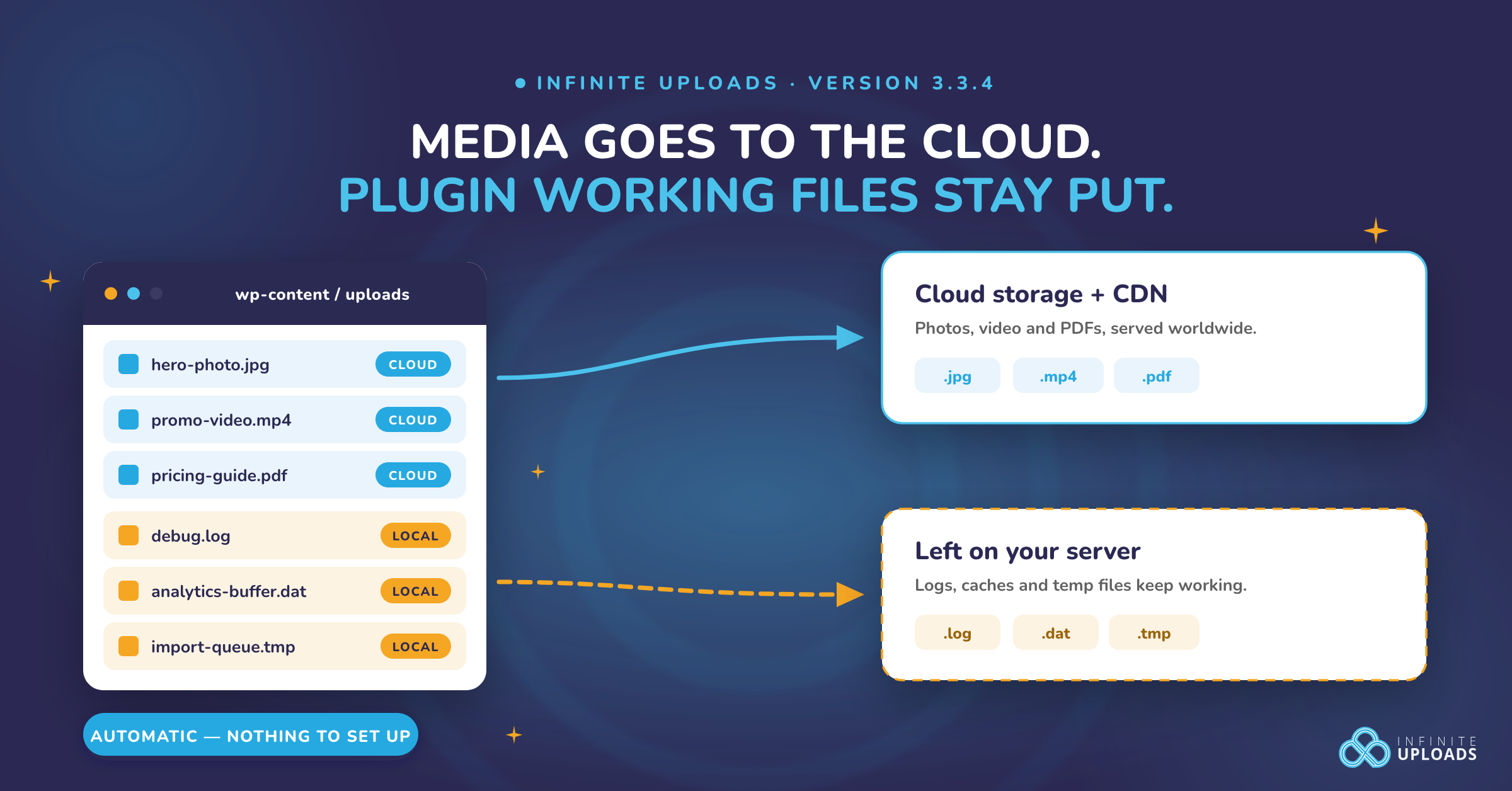
- You store your media files — images, videos, PDFs — in cloud storage (like Amazon S3).
- You serve those files through a CDN, like CloudFront, so they load fast from edge locations close to your visitors.
- Your hosting server no longer has to deal with serving large media files or managing bloated directories.
Offloading your WordPress media speeds up page load times, eliminates server storage issues, and still lets you use the Media Library as usual, with everything handled in the cloud. It also supports video encoding for smooth streaming and includes an ad-friendly, GDPR-compliant video player.
Infinite Uploads is purpose-built for this exact scenario. It offloads your WordPress media to the cloud, delivers it via CDN, and lets you manage everything from inside the Media Library.
It’s a great fit for media-heavy sites, be it a WooCommerce store, a portfolio, or a course platform. With Infinite Uploads, you get a faster, cleaner, more scalable media setup without the cost of upgrading your host.
What is Infinite Uploads and How Does It Work?
Infinite Uploads is a WordPress plugin that takes the heavy lifting off your hosting server by moving your media files to the cloud and serving them via a CDN.
But unlike cobbled-together S3/CDN solutions, Infinite Uploads is built to work with WordPress, not around it.
Here’s what you get with Infinite Uploads:
- Cloud-based storage and CDN. You can store all your media files in secure cloud storage and deliver them globally. This means no more relying on your hosting server for downloads or file delivery.
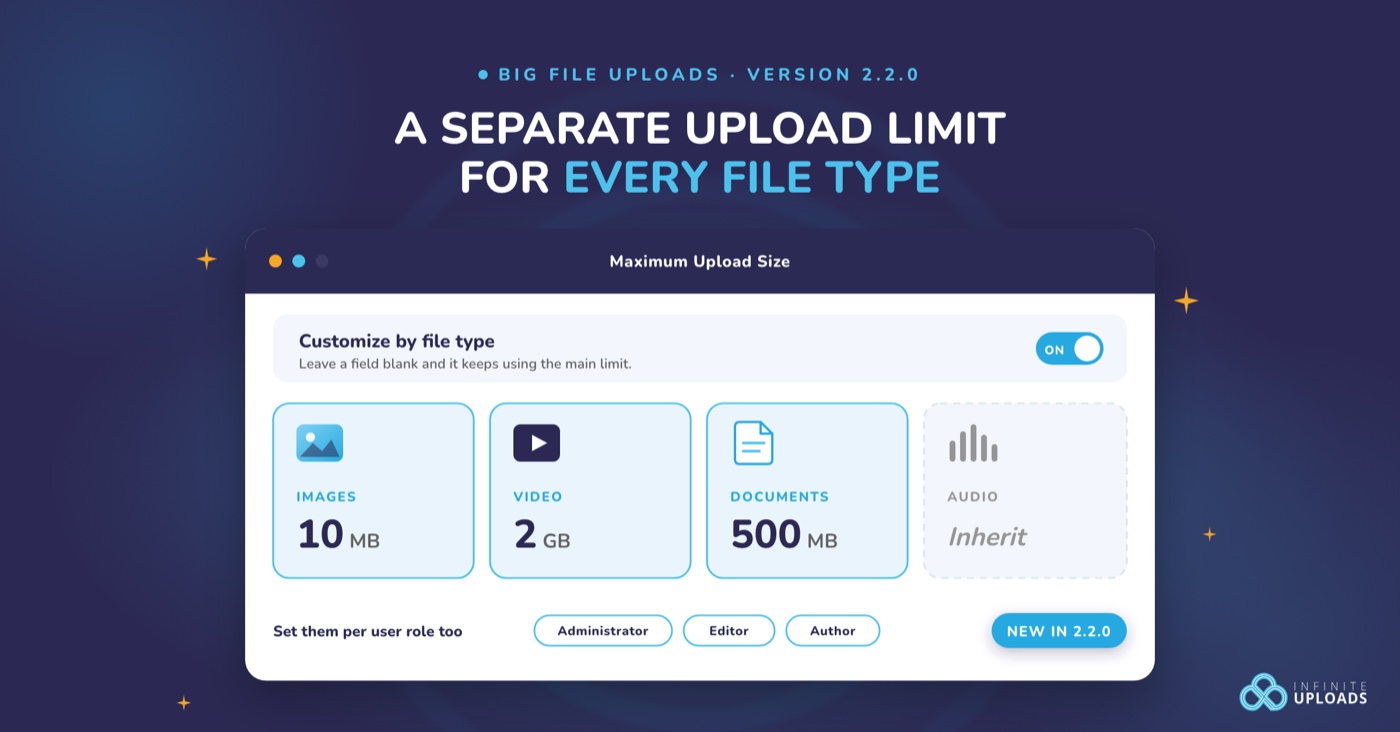
- Use the Media Library as usual. Upload, insert, and manage files directly from your WordPress dashboard as you normally would.
- Built-in compression and optimization. Reduce image sizes and improve performance with optional compression that works in the background.
- Smooth video streaming. Upload videos directly to your Media Library and serve them with adaptive streaming. No buffering, no slowdowns.
- Clean media organization. Keep files organized without bloating your /uploads folder. Everything is stored offsite, with fast, searchable access.
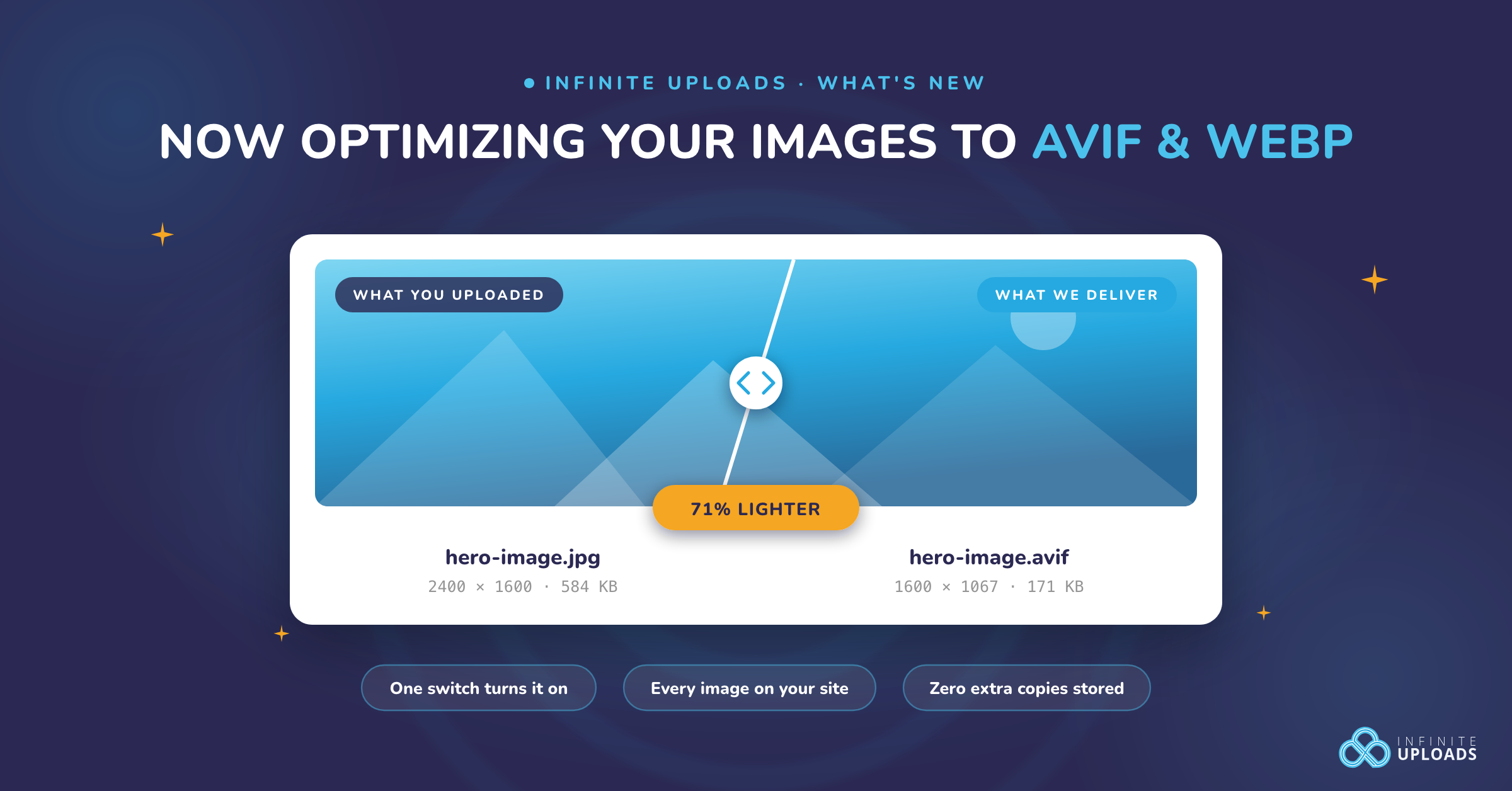
Offloading takes the storage pressure off your hosting plan. Optimization takes the bandwidth pressure off too. Infinite Uploads now converts images to AVIF or WebP as it delivers them, cutting file size by up to 96%, which means every pageview pushes a fraction of the bytes it used to. Fewer bytes is the whole game when your host is billing you for overages. Included with Business plans, and it covers your existing library rather than only new uploads.
Here’s a quick peek at the dashboard:
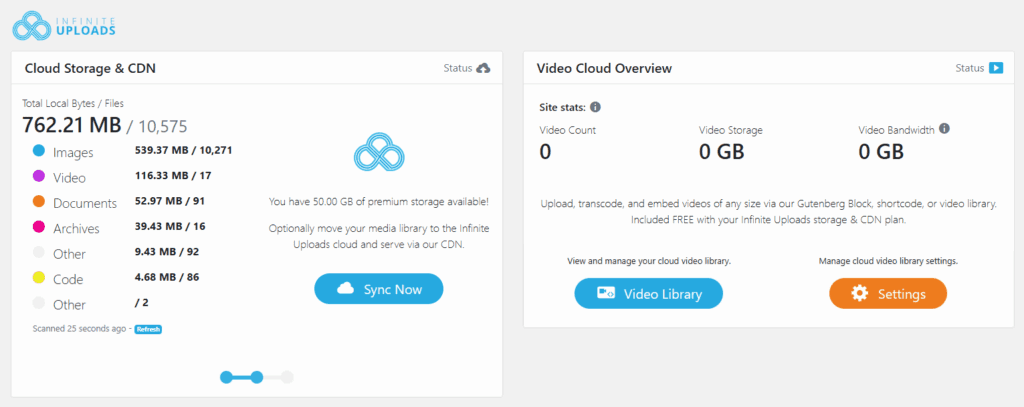
And using it is easier than you think:
- You install the Infinite Uploads plugin.
- It automatically connects your WordPress Media Library to your cloud storage + CDN (this is fully managed, so there’s no configuration needed on your end).
- Any new media you upload gets stored in the cloud and delivered via CloudFront.
- Existing media can be offloaded in bulk to free up space and boost performance fast.
Infinite Uploads is perfect for any WordPress site that’s outgrowing its host due to media demands. That includes:
- Photographers, designers, and creatives with large portfolios
- Online courses and membership sites with hosted videos
- WooCommerce stores with high-res product photos or video demos
- Agencies managing media-heavy sites for multiple clients
If your site’s struggling under the weight of media, Infinite Uploads is a smarter way to boost speed and stability without a costly hosting upgrade.
When Should You Actually Upgrade Hosting?
Of course, upgrading your hosting isn’t always a waste of money.
Here’s when a hosting upgrade makes sense:
- You’ve already offloaded media but are still hitting limits. If your media files are in the cloud, but your site still lags or crashes under load, it might be time to upgrade. Common bottlenecks include:
- PHP worker limits
- Memory or CPU restrictions
- Database performance issues
- You’re getting a lot of traffic on your site. Sudden surges in visitors can overload lower-tier plans.
- Your host doesn’t support modern PHP or caching. If your hosting provider is still running outdated PHP versions, lacks object/page caching, or doesn’t support HTTP/2 then performance will suffer no matter how much you pay.
- You need developer tools or staging environments. Upgrading makes sense if you’re managing multiple environments (staging/live), want SSH access, or need more control over your server stack.
TL;DR: Upgrade hosting when your traffic or infrastructure demands it, not because your Media Library is bloated.
For most WordPress sites, offloading media to the cloud will give you the performance boost you’re looking for without the recurring cost of a larger hosting plan.
Conclusion
If your WordPress site is running out of space or starting to feel slow, upgrading your hosting might seem like the obvious next step.
But more often than not, the real issue isn’t your host. It’s how your media files are stored and served.
Offloading media to the cloud with Infinite Uploads gives you faster load times, a cleaner Media Library, and breathing room for your server.
So, before you think of upgrading your hosting plan, ask yourself: Is it really my hosting, or is it time for a smarter way to handle media?
Try Infinite Uploads free for 7 days and see the difference cloud media offloading makes for your performance, your storage, and your peace of mind.